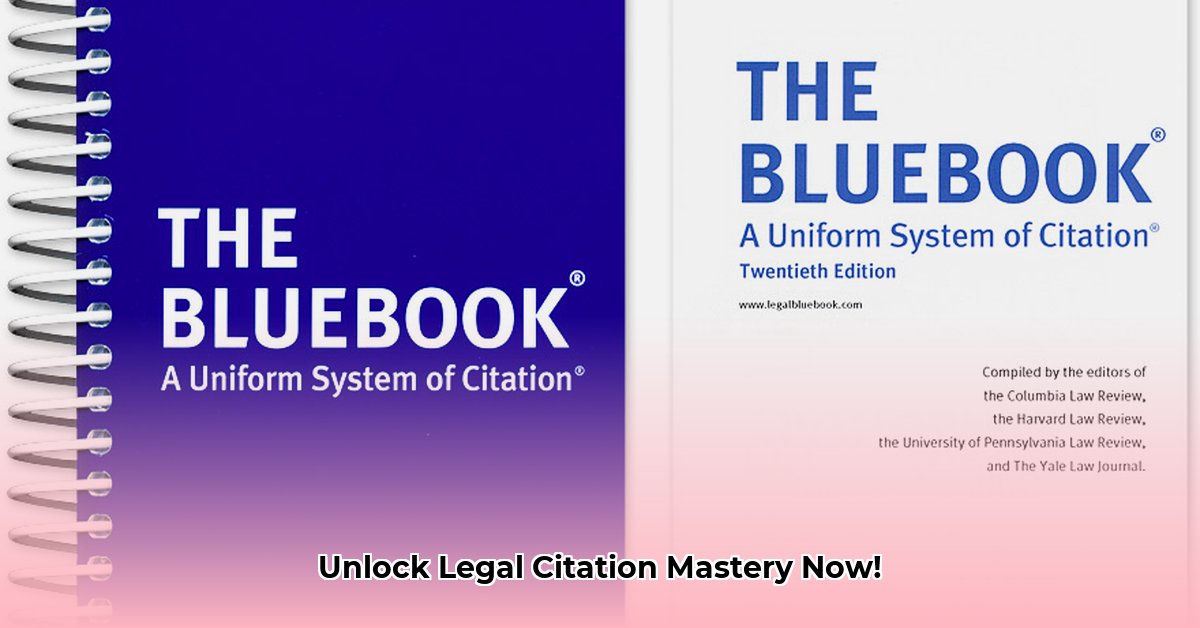
Understanding the Importance of Proper Legal Citation
Need to master legal citation? This guide clarifies the use of the 20th edition of The Bluebook: A Uniform System of Citation, a cornerstone of legal writing in the United States. While a "Bluebook 20th Edition PDF free download" might seem appealing, obtaining the publication through legitimate channels is crucial to avoid copyright infringement and maintain ethical practice. This guide will equip you with the knowledge to accurately cite legal sources, enhancing the credibility and impact of your work. Accurate citation demonstrates careful research and attention to detail, building trust and credibility with judges, professors, and colleagues. For a helpful resource, check out this Bluebook guide.
Core Concepts of Bluebook Citation
The Bluebook provides a structured system for citing various legal sources. Let's explore the core elements for common source types:
1. Citing Cases: A case citation includes the case name (e.g., Smith v. Jones), reporter (official publication), volume number, page number, court, and year. For example: Smith v. Jones, 123 U.S. 456 (1900).
2. Citing Statutes: Statute citations require the jurisdiction abbreviation (e.g., U.S. for federal), code abbreviation (e.g., U.S.C.), section number, and optionally, the year. For example: 42 U.S.C. § 1983 (2023).
3. Citing Books: Book citations should include the author's last name, book title (italicized), relevant page number(s), publisher, and year. For example: (Smith, A Guide to Legal Citation, p. 123 (LexisNexis 2024)).
4. Citing Articles: Journal article citations necessitate the author's name, article title, journal name (often abbreviated), volume number, page number, and year. For example: (Jane Doe, Legal Research Strategies, 12 Harv. L. Rev. 123 (2000)).
Common Errors and How to Avoid Them
Even seasoned legal professionals can make citation mistakes. Here are common pitfalls:
- Incorrect Punctuation: Misplaced commas or periods can significantly alter the meaning. Pay close attention to detail.
- Inconsistent Formatting: Maintain uniformity in font, spacing, and capitalization throughout your document.
- Omitted Information: Always ensure all necessary details are present in each citation.
- Improper Abbreviations: Use only Bluebook-approved abbreviations to avoid ambiguity.
Tips for Efficient Citation
- Leverage Citation Software: Tools like Westlaw or LexisNexis streamline the citation process, reducing errors and saving time.
- Organize Research Notes: Systematic note-taking simplifies the citation creation.
- Careful Proofreading: Multiple reviews, ideally by a second party, are crucial to catch errors.
Applying Bluebook Rules to Different Contexts
The Bluebook's application varies slightly depending on the context. Law review footnotes often use shorter citations, while court documents require more complete citations for clarity. Always adapt your approach based on the specific requirements of the publication or jurisdiction.
Obtaining the Bluebook Ethically
While free downloads exist, using unauthorized copies of The Bluebook is unethical and potentially illegal. Acquiring the publication officially through a legal publisher or your institution's library is vital for ethical and legal compliance. This ensures access to the most accurate and up-to-date version.
Conclusion
Mastery of legal citation is fundamental for legal professionals and students. Utilize this guide as a starting point, but always consult the official Bluebook for comprehensive rules and guidance. Remember, accurate citation reflects diligence and enhances your credibility.
Appendix: Quick Reference Guide
| Source Type | Key Elements |
|---|---|
| Cases | Case name, reporter, volume, page, court, year |
| Statutes | Jurisdiction, code, section, year (optional) |
| Books | Author, title (italics), page(s), publisher, year |
| Articles | Author, title, journal (abbreviated), volume, page, year |
⭐⭐⭐⭐☆ (4.8)
Download via Link 1
Download via Link 2
Last updated: Sunday, April 27, 2025